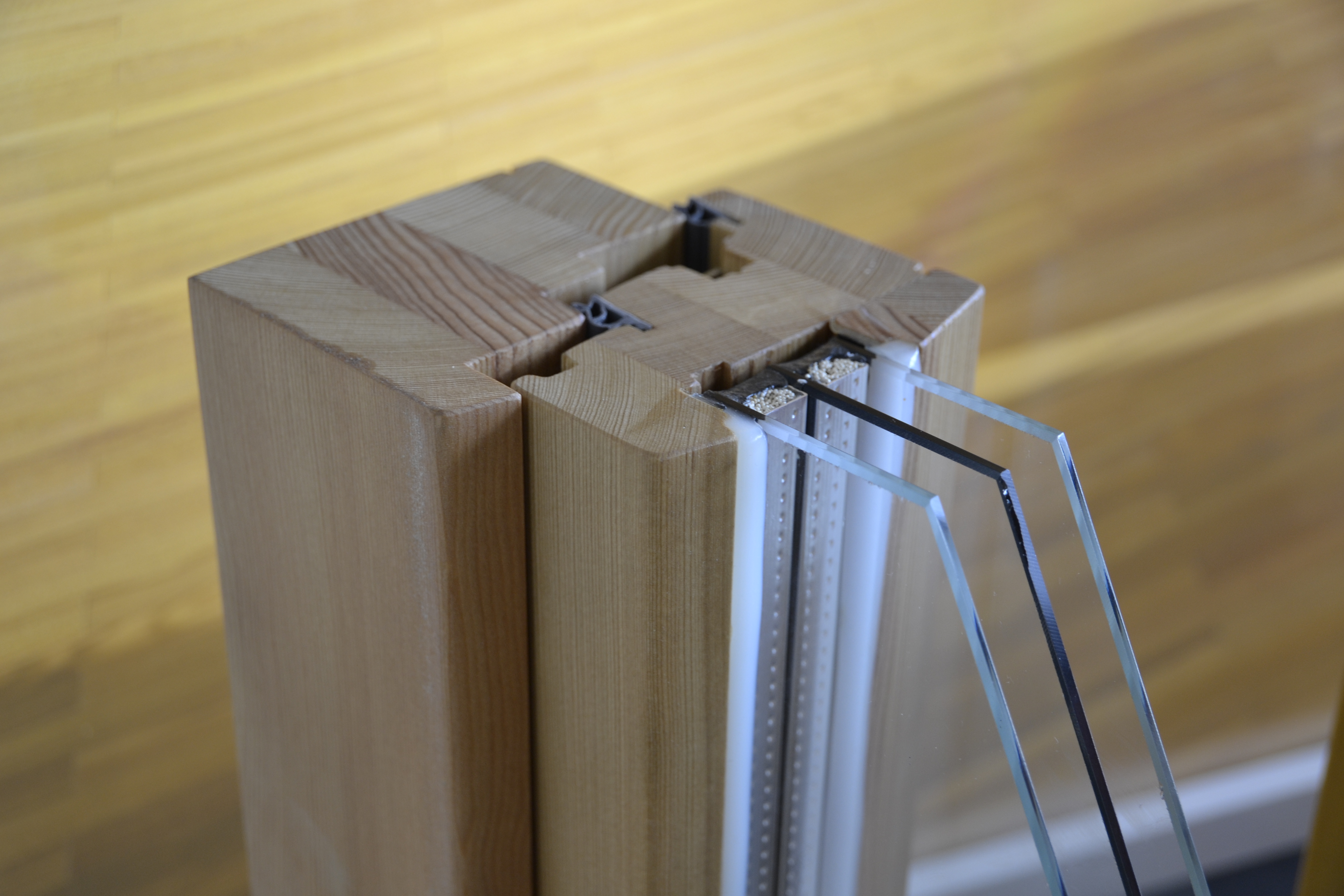
Insulated glass units (IGUs) are the sealed assemblies of glass panes and gas-filled gaps that form the transparent part of a modern window. In Canada, where winter temperatures can reach −30°C or lower in many regions, choosing between double-pane and triple-pane configurations has a measurable effect on heat retention, surface condensation, and long-term energy costs.
This article sets out the technical differences between the two configurations, describes how each performs under cold-climate conditions, and identifies circumstances where one option is more appropriate than the other.
How Insulated Glass Units Work
An IGU consists of two or more glass panes separated by a spacer bar and sealed at the perimeter. The space between panes is filled with a gas — typically argon, though krypton is used in narrower gaps — which conducts heat less readily than air. The unit functions as a thermal barrier: the outer pane faces the cold, the inner pane faces the heated interior, and the gas gap limits heat transfer between them.
Triple-pane units add a third pane, creating two separate gas-filled gaps. This additional barrier lowers the U-value of the glazing assembly, raises the temperature of the innermost glass surface, and reduces the rate of heat loss through the window.
U-value explained
The U-value (or U-factor) measures the rate of heat transfer through a window assembly, expressed in W/m²·K. A lower number means better insulation. Canadian energy standards reference both the center-of-glass U-value and the whole-window U-value, which accounts for the frame and edge-of-glass effects.
Performance Comparison
The table below provides approximate whole-window U-values for typical double and triple-pane configurations in PVC or wood frames. Actual values vary by manufacturer, frame material, spacer type, and glazing coatings applied.
| Configuration | Gas Fill | Low-E Coating | Approx. U-value (W/m²·K) |
|---|---|---|---|
| Double-pane | Air | None | 2.8 – 3.2 |
| Double-pane | Argon | One surface | 1.4 – 1.8 |
| Triple-pane | Argon | Two surfaces | 0.8 – 1.2 |
| Triple-pane | Krypton | Two surfaces | 0.6 – 0.9 |
The difference between a standard double-pane with argon and a triple-pane with argon represents a meaningful reduction in heat loss. In a northern Canadian home with many windows, this translates to lower heating loads during the winter months.
Condensation and Surface Temperature
One practical advantage of triple glazing in cold climates is less visible in energy calculations but noticed daily: the interior glass surface stays warmer in winter. With an outdoor temperature of −20°C and a heated interior at 21°C, a double-pane window typically has an interior glass surface temperature near 8–12°C. At that temperature, condensation forms when indoor relative humidity exceeds roughly 45%. A well-specified triple-pane unit in the same conditions may have an interior surface temperature near 15–17°C, allowing higher indoor humidity levels before condensation appears.
For homes in humid northern climates, or where residents prefer higher indoor humidity in winter, this difference is practical rather than theoretical.
Weight and Structural Considerations
Triple-pane units are heavier than double-pane units of the same size. A triple-pane unit can weigh 50% more or more than its double-pane equivalent, depending on glass thickness and gap width. This increased weight affects frame selection, hardware requirements, and installation procedures. Not all existing window openings are sized or reinforced to carry a heavier unit without modification.
Larger operable sashes — such as casements or awnings — require hardware rated for the additional weight to ensure smooth operation over time.
Canadian Climate Context
Canada's climate zones are defined by Natural Resources Canada partly through heating degree days (HDD), which measure the accumulated temperature difference from a base temperature over a heating season. Winnipeg, for example, has around 5,700 HDD, while Vancouver sits near 2,900 HDD. In regions with high HDD values, the incremental performance of triple glazing is used more fully over a longer heating season.
The Natural Resources Canada residential windows guide provides climate-zone-specific recommendations. ENERGY STAR® qualification levels in Canada are also tiered by zone, with northern and most-northern zones requiring lower U-values that typically point toward triple-pane configurations.
Cost Considerations
Triple-pane windows carry a higher upfront cost than comparable double-pane products. The difference varies by manufacturer and frame type, but a premium of 15–30% over double-pane is commonly cited in Canadian market comparisons. Whether that premium is recovered through energy savings depends on the local energy price, the heating season length, and how the comparison is structured.
In jurisdictions with rebate programs — some provincial utilities and Natural Resources Canada's Canada Greener Homes program have offered incentives for high-performance windows — the net cost difference narrows. Program details and eligibility requirements change, so current program terms should be verified directly with the relevant body.
Summary
Double-pane units with low-E coatings and argon fill represent an adequate baseline for many Canadian climate zones. Triple-pane units offer measurably lower U-values, warmer interior glass surfaces, and reduced condensation risk, which are relevant factors in colder climate zones, passive house construction, or renovations targeting high airtightness. The decision involves comparing upfront cost, structural requirements, and the local climate against long-term performance expectations.