The frame that holds an insulated glass unit affects a window's thermal performance, durability, and maintenance requirements as much as the glazing itself. In cold Canadian climates, frames are subjected to repeated freeze-thaw cycles, sustained low temperatures, wind-driven rain, and UV exposure. Each major frame material responds to these conditions differently.
This article describes the characteristics of the four most common frame materials used in Canadian residential and light commercial windows — wood, PVC (vinyl), fiberglass, and aluminum-clad wood — with attention to cold-climate performance.
Wood Frames
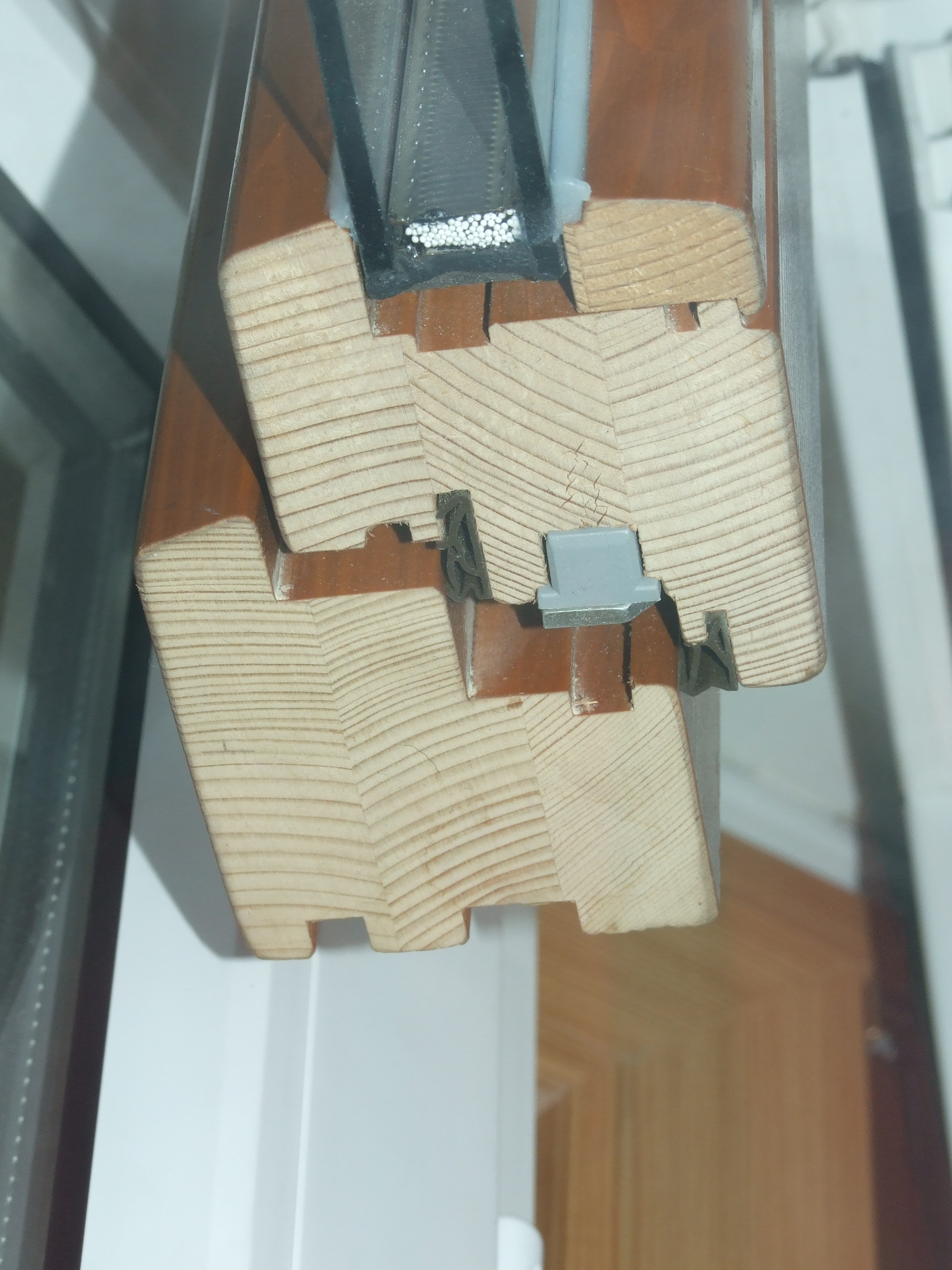
Wood is among the oldest window frame materials and remains in use for its thermal properties, workability, and appearance. Solid wood frames have low thermal conductivity relative to metals, which reduces heat loss through the frame. In terms of frame U-value alone, wood performs comparably to PVC and better than unbroken aluminum.
The main limitation of wood in cold and humid climates is moisture sensitivity. Wood swells and contracts with changes in moisture content, which can cause frames to bind in their openings or develop gaps at joints over time. Exterior exposure to snow, freezing rain, and summer humidity accelerates paint film breakdown and, without regular maintenance, wood rot.

Exterior cladding — aluminum or PVC applied over the wood's exterior face — reduces maintenance requirements while retaining the interior appearance and thermal properties of wood. This hybrid approach is common in Canadian markets and extends the service life of wood-frame windows in harsh conditions.
Cold-climate suitability
In dry cold climates (parts of Alberta, the Prairies), wood performs reasonably well when properly finished and maintained. In coastal British Columbia or Atlantic Canada, where moisture levels are higher, cladded wood or alternative materials are often preferred for new installations.
PVC (Vinyl) Frames
Unplasticized PVC, commonly called vinyl in North American markets, became the dominant residential window frame material in Canada during the 1980s and 1990s. Its appeal comes from low maintenance requirements, resistance to moisture, and reasonable thermal performance when profiles are multi-chambered.
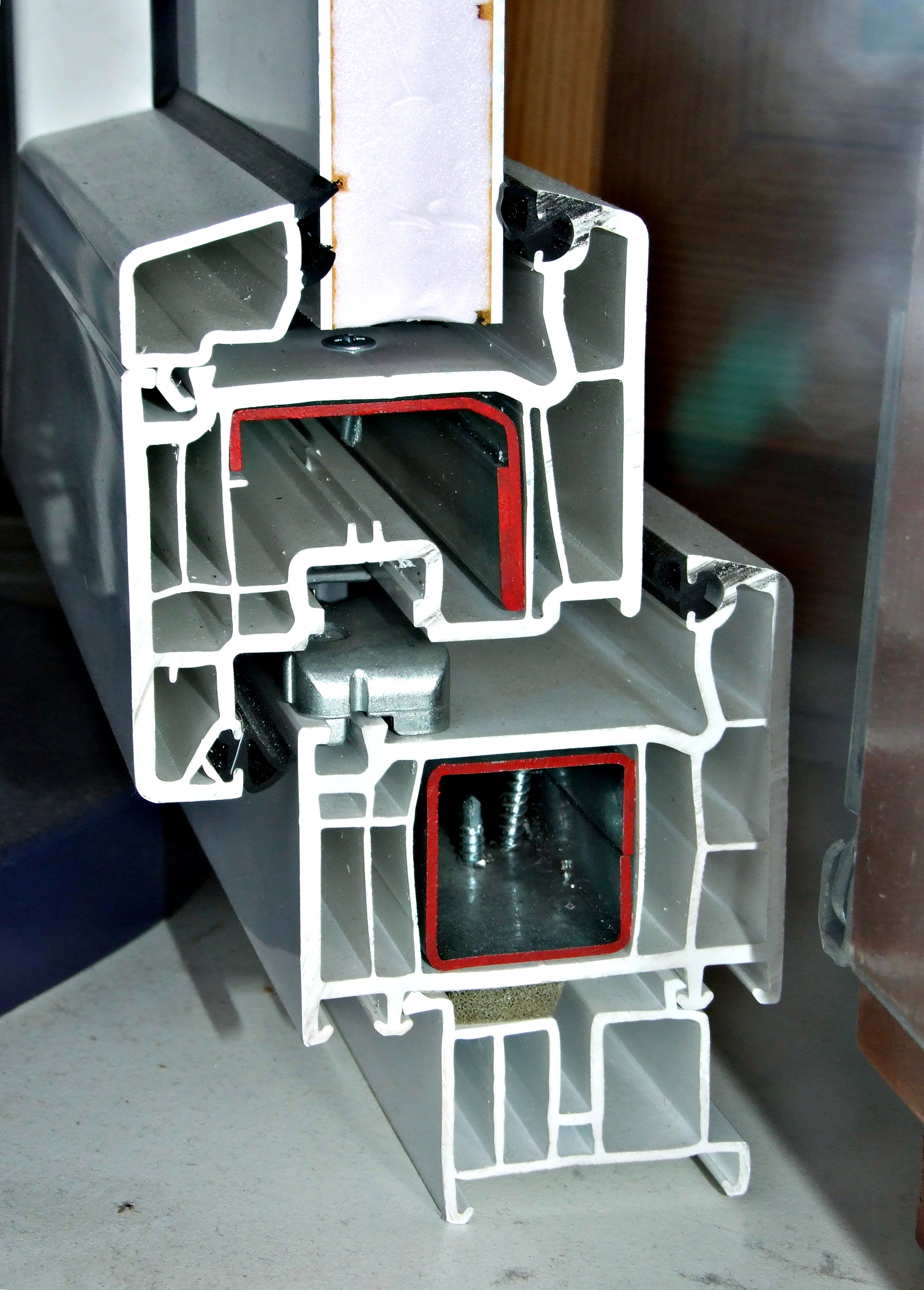
PVC has low thermal conductivity, but an unreinforced PVC profile has limited structural rigidity. Most manufacturers address this by adding steel or aluminum reinforcement inside the chambers of larger profiles. Multi-chamber profiles — where the hollow cross-section is divided into several smaller cavities — further improve thermal performance by limiting convection within the frame.
PVC frames expand and contract with temperature changes more than wood or fiberglass. The coefficient of thermal expansion for PVC is several times higher than that of glass. In Canadian conditions, where a frame might go from −30°C to above 30°C across a year, this movement is significant. Manufacturers accommodate this through profile design and installation tolerances, but improperly installed or undersized frames can show visible gaps at corners in extreme cold.
Multi-chamber profiles
The number of chambers in a PVC profile affects its thermal resistance. A five-chamber profile has more internal cavities than a three-chamber profile, which slows heat flow through the frame cross-section. Higher-performance PVC windows typically use five or more chambers in the main frame and sash profiles.
Cold-climate suitability
PVC is widely used across Canadian climate zones. The main consideration in extreme cold is selecting profiles from manufacturers with documented testing at low temperatures. Brittleness of lower-grade PVC at temperatures below −20°C has been noted in some products; well-formulated modern PVC compounds are designed to remain flexible at cold temperatures.
Fiberglass Frames
Pultruded fiberglass frames are made by drawing glass fiber strands through a resin matrix, producing a profile with high stiffness, low thermal conductivity, and a coefficient of thermal expansion close to that of glass. The close match between frame and glass expansion rates reduces stress on the IGU seal over time, which can contribute to longer seal life.
Fiberglass frames are generally heavier than PVC but lighter than solid wood, and they do not require steel reinforcement for structural performance. The material does not rot, swell, or corrode. Interior and exterior surfaces can be painted, though factory paint finishes vary in adhesion quality.
In terms of thermal performance, fiberglass frames are competitive with or better than PVC, and the material's durability makes it a preferred choice in high-performance or passive house construction. The higher cost compared to PVC is the primary factor limiting its market share.
Cold-climate suitability
Fiberglass performs well in all Canadian climate zones. Its dimensional stability in extreme cold and consistent thermal expansion coefficient are advantages in cold and cold-mixed climates. It is used in passive house projects in Manitoba, Saskatchewan, and northern Ontario where long-term air sealing performance is a priority.
Aluminum-Clad Wood Frames
Aluminum cladding applied to the exterior face of a wood frame protects the wood from direct weather exposure while retaining the structural and thermal properties of the wood interior. The aluminum skin handles UV exposure, rain, and freeze-thaw cycling, while the wood provides the frame's insulating and load-bearing function.
The cladding is typically formed aluminum sheet mechanically attached or adhesively bonded to the wood. It requires no painting on the exterior and is available in a range of factory colors, typically baked-on polyester or fluoropolymer coatings. Interior wood surfaces still require finishing and occasional maintenance.
Aluminum-clad wood frames are heavier than PVC or fiberglass alternatives of similar dimensions and are typically priced higher. They are common in custom residential projects, heritage-sensitive renovations, and high-end new construction in Canada.
Cold-climate suitability
The combination of exterior aluminum and interior wood provides reasonable performance in cold climates. The aluminum-wood interface requires a thermal break in high-performance applications to prevent the aluminum cladding from acting as a thermal bridge to the cold exterior.
Frame Material Comparison
| Material | Thermal Performance | Moisture Resistance | Maintenance | Relative Cost |
|---|---|---|---|---|
| Wood | Good | Moderate (needs sealing) | High | Moderate–High |
| PVC (vinyl) | Good (multi-chamber) | Excellent | Low | Low–Moderate |
| Fiberglass | Excellent | Excellent | Low | High |
| Aluminum-clad wood | Good | Good (exterior) | Low (exterior) | High |
Summary
PVC remains the most common frame material in Canadian residential construction for its combination of moisture resistance, low maintenance, and cost. Fiberglass offers superior thermal stability and dimensional consistency in extreme temperatures, at a higher price point. Wood and aluminum-clad wood are chosen for appearance, heritage requirements, or high-end projects, with maintenance demands that vary depending on whether exterior cladding is included. Frame selection should account for the specific climate zone, building type, maintenance capacity, and the performance level of the glazing unit being installed.